For security camera distributors, choosing a solar-powered camera is not simply a matter of comparing resolution, battery capacity, or the number of features listed on a product page. The more important question is whether the camera can meet customers’ monitoring needs without creating unnecessary power consumption or maintenance requirements.
This becomes particularly important when comparing PIR-triggered solar cameras with AOV solar cameras. Both are designed to support surveillance in locations where conventional wired power may be inconvenient, but their recording strategies can differ significantly.
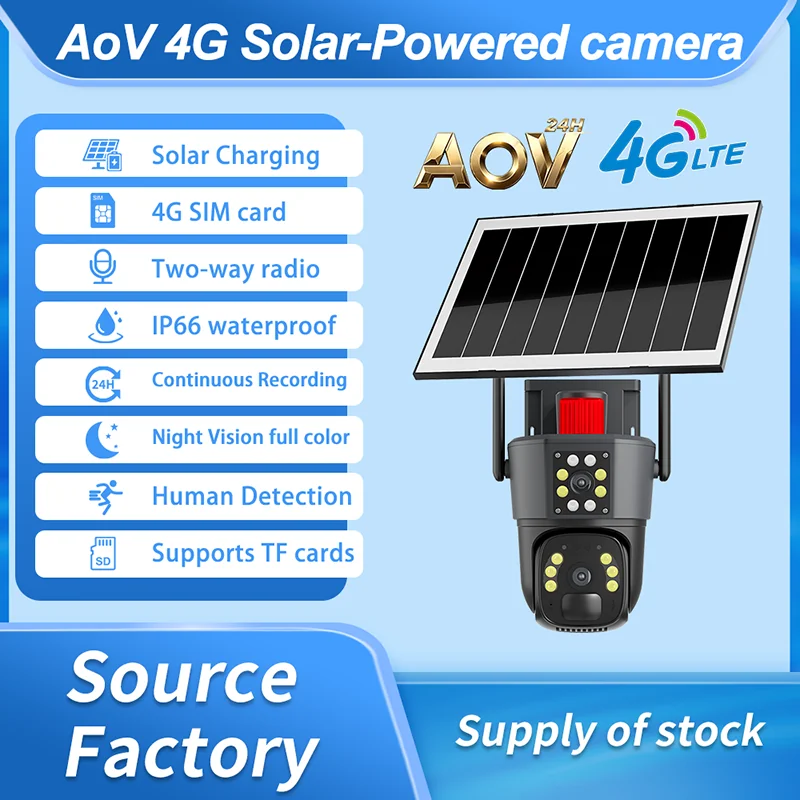
A PIR-triggered camera typically relies on a passive infrared sensor to detect changes in infrared radiation associated with movement. An AOV camera uses an always-on video approach, although the exact recording and power-management mechanism varies by model. These differences can affect how events are captured, how power is managed, and which applications each camera suits best.
For distributors building a solar security camera product line, understanding these differences helps match the right product to the right customer. This guide compares the two approaches and explains what to evaluate when considering Anjia’s LQ82A30 AOV dual-lens solar camera.
1. Understand the Difference Between PIR-Triggered and AOV Cameras
The main difference lies in how the camera monitors activity and initiates recording.
A PIR-triggered solar camera uses a passive infrared sensor to detect movement-related changes in the surrounding environment. When the sensor registers an event, the camera wakes up or initiates the relevant recording process, depending on its design. This approach can help conserve battery power because the device does not need to operate its main video functions continuously at full capacity.
However, the camera’s response depends on sensor placement, detection range, environmental conditions, and wake-up time. In some situations, an event may already be underway before the camera begins capturing useful footage.
An AOV solar camera, by comparison, uses an always-on video approach designed to maintain a level of ongoing visual monitoring while managing power consumption. Depending on the implementation, the camera may use low-power video operation and switch to a different recording mode when an event occurs.
The term AOV does not guarantee continuous full-resolution, full-frame-rate recording. Distributors should check the specific product’s recording behavior, including its normal operating mode and what happens when motion is detected.
The distinction matters because customers may value either lower power consumption or greater continuity in visual event coverage. Understanding their priorities is the first step toward recommending the appropriate camera.

2. Consider What Customers Need to Capture
Not every surveillance application requires the same recording behavior.
For example, a customer monitoring an occasional visitor at a private entrance may mainly need alerts and short event recordings. A property owner who wants to understand how a person approached a gate, moved across the yard, and left the area may care more about the sequence leading up to and following an event.
A PIR-triggered camera can be suitable when event-based monitoring meets the customer’s needs. Its performance should be evaluated against the required detection behavior and the possibility of missing activity before recording begins.
An AOV camera may be more appropriate when customers value a more continuous visual record, provided the specific model’s AOV implementation captures the required events and details.
For distributors, the useful question is not simply whether AOV is better than PIR. It is whether the camera’s actual recording behavior matches the customer’s expectations.
Before recommending a product, clarify what needs to be recorded, how quickly events must be captured, and whether users need to review activity leading up to a detection alert.
3. Balance Recording Requirements with Solar Power Availability
Power management is a central consideration for any solar-powered security camera.
A camera may be installed in a location without a convenient power outlet, but that does not mean its solar panel will always generate enough energy to meet demand. Available sunlight changes with season, weather, installation angle, shading, and geographical location.
PIR-triggered cameras often have an advantage when the monitoring requirement allows the main video system to remain in a lower-power state between detected events. Actual battery performance still depends on detection frequency, recording duration, network activity, night vision, and the camera’s internal power-management design.
AOV solar cameras face a different design challenge: maintaining ongoing video monitoring while managing power consumption. Their operating modes, processing requirements, and event-recording behavior can influence total energy demand.
Distributors should therefore avoid assuming that all PIR cameras have longer battery life or that every AOV camera consumes excessive power. The outcome depends on the hardware and configuration.
When evaluating an AOV solar security camera, request power-consumption information and runtime test results under defined operating conditions. Where possible, compare the models using similar detection activity, lighting conditions, network settings, and installation environments.
This provides a more useful basis for product selection than comparing battery capacity alone.
4. Evaluate Night Vision and Low-Light Monitoring Separately
Nighttime performance is another important consideration when comparing solar security cameras.
A camera may offer motion detection and night vision, but these functions solve different problems. Detection determines when the device recognizes activity, while night vision affects the camera’s ability to produce usable images in low-light conditions.
PIR detection may respond to movement under dark conditions because it relies on changes in infrared radiation rather than ordinary visible-light images. However, the camera still needs an appropriate imaging system to capture useful footage once an event occurs.
AOV cameras must likewise be evaluated for both their recording strategy and their low-light image quality. The AOV designation alone does not establish how well a camera captures moving subjects at night.
For distributors, the best approach is to examine sample footage rather than relying exclusively on terms such as “night vision” or “low-light monitoring.” Check how the camera renders moving people, handles changes in illumination, and preserves useful details under realistic installation conditions.
Also confirm whether the specific model uses infrared illumination, starlight imaging, or another night-monitoring method. These are distinct capabilities and should be described accurately in product listings.
5. Compare Camera Coverage and Detection Functions
Recording strategy is only one part of the product comparison. Lens design, viewing coverage, detection functions, and mobile controls also influence the customer experience.
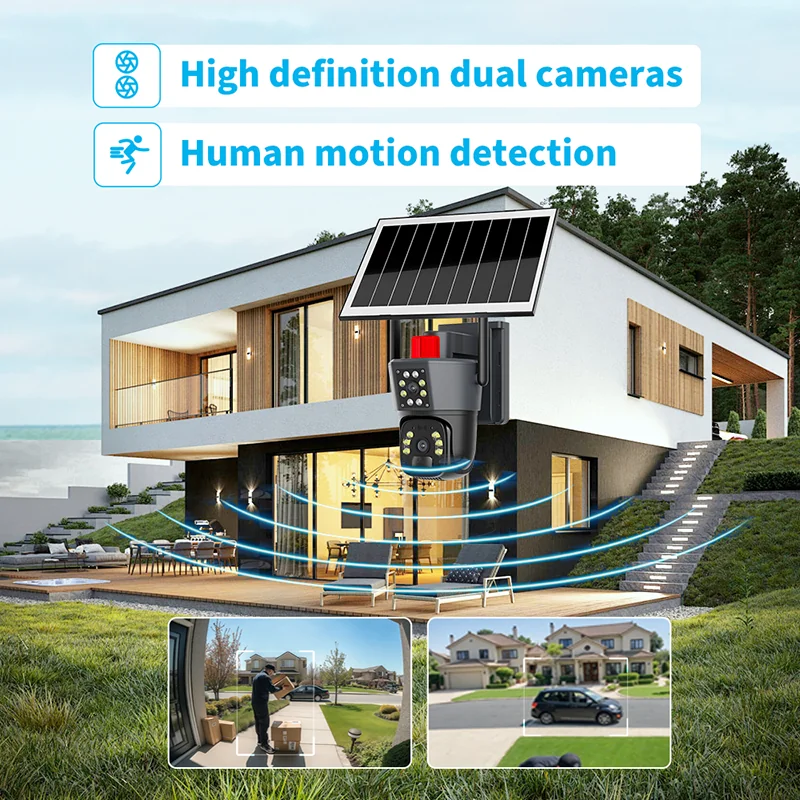
A single-lens camera may be sufficient for a defined entrance or a narrow monitoring area. A dual-lens camera can provide a different coverage arrangement, depending on how its lenses are configured. For example, one lens may support a wider overview while another provides a different viewing angle or additional detail. Distributors should verify the actual lens functions rather than assume that every dual-lens model uses the same arrangement.
Detection features also deserve attention. Motion detection and human detection may help users filter activity according to the camera’s supported functions. Two-way audio can add communication capabilities, while remote viewing and control allow users to check the scene through a mobile device.
When comparing PIR-triggered and AOV solar cameras, evaluate these features alongside the recording method. A camera with an appropriate lens configuration and useful detection functions may fit a customer better than a model selected on recording technology alone.
For distributors, a clear comparison of coverage, detection, and recording behavior can make product recommendations more accurate and reduce misunderstandings after installation.
6. Which Camera Type Fits Different Customer Markets?
The best choice depends on the customer’s monitoring objectives, installation conditions, and expectations for recording continuity.
For basic event monitoring: PIR-triggered solar cameras may suit customers who mainly want notifications and recordings when movement is detected. They can be practical for entrances, smaller outdoor areas, and installations where lower power demand is a priority.
For monitoring that values event continuity: An AOV solar camera may be worth considering when customers want more visual context around detected activity. Distributors should confirm how the specific model records before, during, and after an event.
For remote or difficult-to-wire locations: Both approaches can support solar-powered deployments, but the product must be matched to local sunlight, network availability, and the expected monitoring workload.
For customers who need more than basic detection: Features such as two-way audio, mobile access, local storage, and flexible viewing coverage may influence the buying decision as much as the recording technology. These categories are starting points rather than fixed rules. The final recommendation should reflect the actual device specifications and the conditions in which it will operate.
7. What Should Distributors Check Before Ordering AOV Solar Cameras?
When adding an AOV solar camera to a product range, distributors should evaluate more than the headline feature list. The product must meet the technical needs of the intended market and deliver an understandable user experience.
Start with the recording mechanism. Confirm what the camera captures during normal operation, how it responds to an event, and whether any pre-event recording is available. Do not assume these capabilities from the AOV label alone.
Next, review the power configuration. Check the battery specification, compatible solar panel, charging requirements, and expected operating conditions. If battery runtime is a selling point, obtain results from tests that reflect realistic usage.
The remaining checks should cover image quality, night monitoring, lens configuration, motion and human detection, two-way audio, mobile app functions, local storage, and installation requirements. For outdoor use, verify the applicable environmental protection rating and operating temperature range for the exact model.
Finally, evaluate sample units before committing to a bulk order. A structured trial helps distributors confirm that the recording behavior, user interface, and overall performance match the expectations of their target customers.
8. Anjia LQ82A30: An AOV Dual-Lens Solar Camera for Product Evaluation
Anjia’s LQ82A30 AOV Dual-Lens Solar Camera is an option for distributors evaluating solar-powered monitoring products that combine several core surveillance functions.
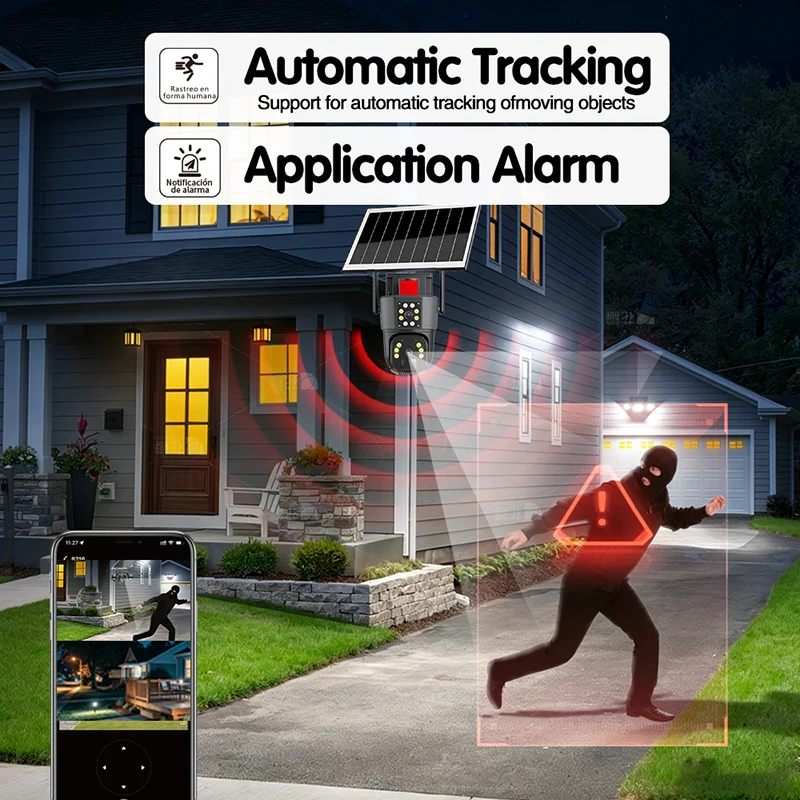
The model supports high-definition video monitoring, two-way audio communication, smart motion and human detection, night-vision monitoring, mobile viewing and control, and local storage. It is categorized as a dual-lens AOV solar camera, allowing distributors to evaluate its viewing arrangement alongside its recording and detection capabilities.
For distributors planning to introduce the LQ82A30 to their product range, several points deserve attention during sample evaluation.
First, confirm how the AOV recording mode operates and how footage is handled when motion or a person is detected. This helps establish whether its recording behavior matches the requirements of the intended application.
Second, test the dual-lens configuration under realistic viewing conditions. The actual roles of the lenses, available viewing angles, and any supported movement or tracking functions should be confirmed using the product specification.
Third, assess how users access the camera through the mobile application, communicate through two-way audio, and retrieve locally stored footage. These functions can influence the product’s suitability for different customer groups.
The LQ82A30 is listed for indoor or outdoor use according to the model configuration. Before offering it for a specific outdoor project, distributors should confirm the relevant environmental protection rating, operating conditions, and installation requirements for the supplied version.
A clear understanding of these details helps distributors position the Anjia LQ82A30 according to its actual capabilities rather than relying on general claims about AOV technology.
Final Thoughts
PIR-triggered and AOV solar cameras address overlapping but different monitoring priorities. PIR-triggered models can be suitable for event-based surveillance where power conservation is important, while AOV models may appeal to customers who need a more continuous visual record. Neither approach automatically guarantees better battery life, complete event capture, or superior nighttime footage.
For distributors, the most effective comparison starts with the customer’s requirements. Consider recording continuity, power availability, night vision, camera coverage, detection functions, storage, and installation conditions together.
Anjia’s LQ82A30 AOV dual-lens solar camera offers a combination of high-definition monitoring, two-way audio, motion and human detection, night vision, mobile control, and local storage. By validating the specific recording mechanism and configuration before ordering, distributors can determine whether the model fits their target market and build a product offering around clearly defined customer needs.