In many households today, the line between home security devices and baby monitoring tools is becoming less obvious. More and more parents are asking a practical question: can indoor home security cameras actually replace traditional baby monitors?
The short answer is yes, and in many cases, they already do. Modern indoor security cameras are no longer designed only for security purposes. With improved image quality, smarter detection systems, and mobile connectivity, they are now commonly used for everyday home monitoring, including baby care. For example, ANJIA’s indoor camera series is often used in both home security and family monitoring scenarios, depending on how users set it up.
Why People Start Using Indoor Security Cameras for Babies
Traditional baby monitors usually focus on basic audio or short-range video. That works in simple situations, but once parents want remote access or clearer image quality, limitations become obvious. This is where wireless indoor security cameras and indoor wifi security cameras start to feel more practical. Instead of switching between devices, users prefer one system that can handle both security and baby monitoring.

What Makes It Work in Daily Use
From a practical point of view, the usability depends on a few core features rather than marketing claims.
Clear image quality in real conditions
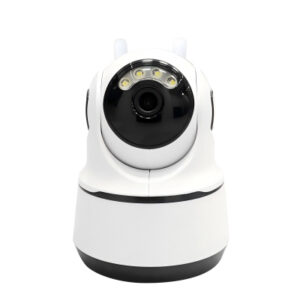
ANJIA’s camera uses 2MP HD resolution combined with H.265 compression. In daily use, this means the video stays relatively clear without taking too much storage space. The starlight-grade F2.0 lens also helps when the room lighting is low, especially at night when babies are asleep.
Motion detection that actually matters
One of the most useful parts of a smart indoor security camera is motion detection.
When the camera detects movement, it can:
- Start recording automatically
- Send alerts to a mobile phone
- Track movement within the frame
For parents, this is more useful than continuous monitoring because it reduces the need to constantly check the screen.
Coverage without blind spots
The camera supports 350° horizontal rotation and 60° vertical tilt. In real room setups, this allows it to cover most areas without needing to move the device manually. This is especially helpful in bedrooms or living rooms where babies may move around in different spots.
Storage flexibility
Different families handle recordings differently. Some prefer TF card storage, others prefer cloud backup. This camera supports both, which gives users flexibility depending on how they want to manage data.
Power setup options
The device can also run on two 18650 batteries (optional), which makes placement more flexible in places where power outlets are not ideal.

Are Indoor Security Cameras Better Than Baby Monitors?
It depends on what you expect.
| Aspect | Indoor Security Cameras | Traditional Baby Monitors |
|---|---|---|
| Video quality | Higher (HD level) | Basic to moderate |
| Remote access | Yes (mobile app) | Limited range |
| Alerts | Motion detection + notifications | Usually none |
| Storage | TF card / cloud | Limited |
| Flexibility | Multi-use device | Single-purpose |
In practice, indoor home security cameras are more flexible, especially for parents who are not always at home or want to check in remotely.
When It Makes Sense to Use Them
Using a wireless indoor security camera as a baby monitor makes sense in situations like:
- You need remote viewing outside the home
- You want clearer video quality
- You prefer motion-based alerts instead of constant monitoring
- You want one device for both security and baby care
A Few Practical Things to Keep in Mind
There are still a few points worth considering before replacing a baby monitor completely:
- WiFi stability matters more than the camera itself
- Placement affects visibility more than resolution
- Privacy settings should be checked properly
- Night-time lighting conditions can still affect clarity in some rooms
These are not product limitations, but real-world usage factors.

Conclusion:
In everyday use, home security cameras indoor have gradually become a practical alternative to traditional baby monitors.With features like HD imaging, motion detection, pan-tilt control, and mobile access, ANJIA’s indoor security cameras can comfortably handle both security and baby monitoring needs. They don’t just replace a baby monitor—they extend its function into something more flexible and connected to modern home usage habits.