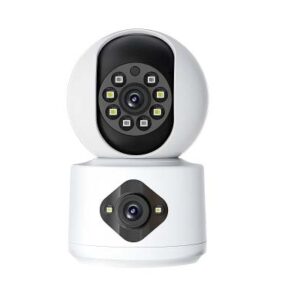
Outdoor security cameras are expected to monitor more than just a single entrance or viewing angle. Residential properties, áreas de estacionamento, armazéns, fazendas, and commercial facilities may have several areas that need to be observed simultaneously. A conventional single-lens camera can provide a useful view of one location, but its coverage may be limited by the camera’s installation position and viewing direction.
This is one reason why multi-lens technology in outdoor security cameras is attracting attention. By integrating multiple lenses into one camera system, manufacturers can provide different viewing perspectives and improve the flexibility of outdoor surveillance.
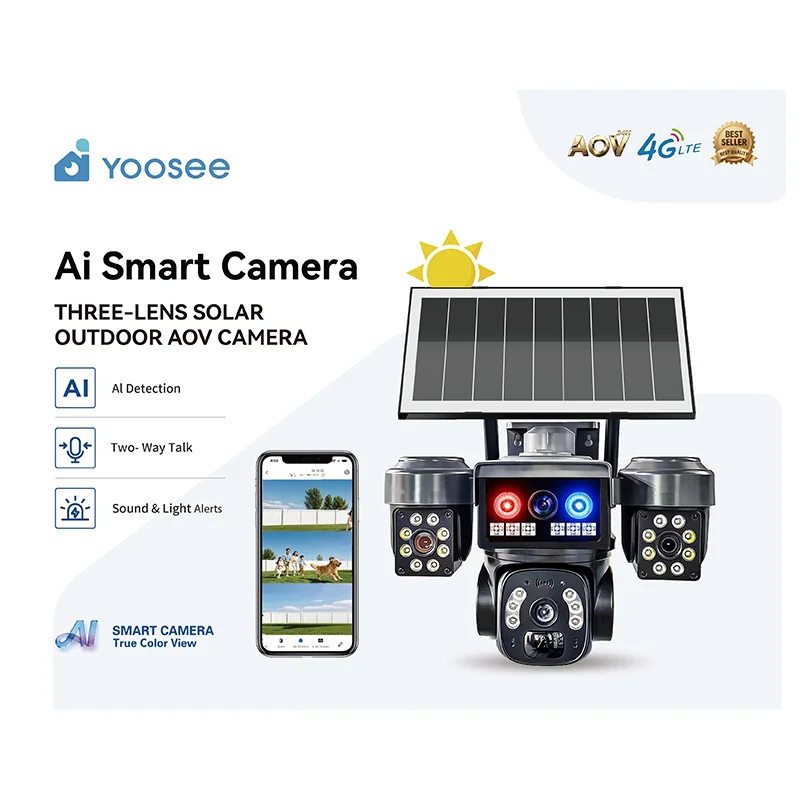
For users looking for broader monitoring capabilities without installing several independent cameras, a triple-lens security camera offers an alternative approach. ANJIA’s AOV Triple-Lens Solar Camera combines three 4.0 lentes mm, cobertura pan-tilt independente de bala, 6MP video, 4Conectividade G, and solar power support to address different outdoor security requirements.
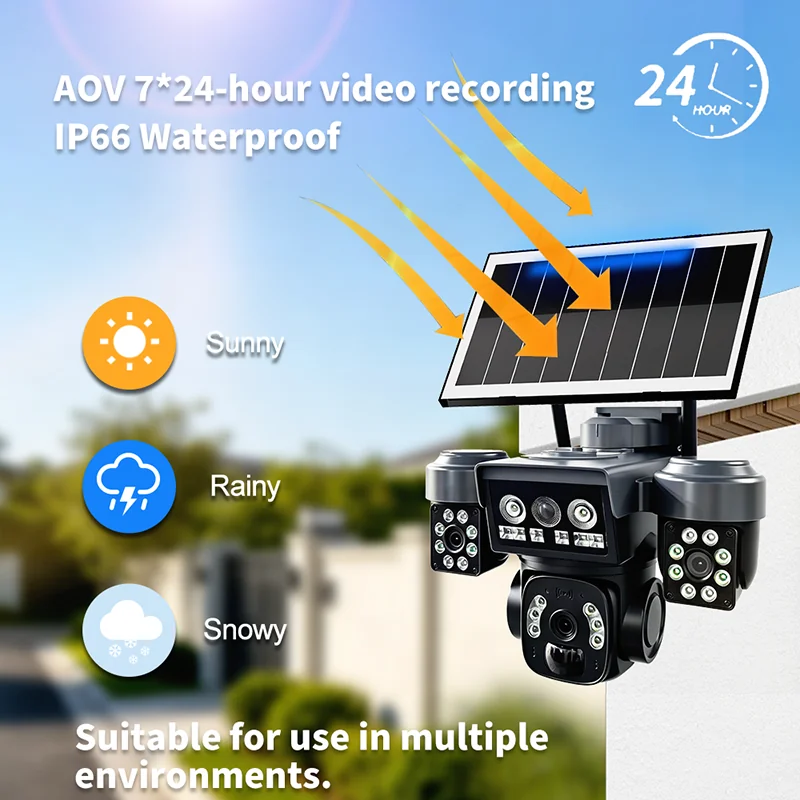
1. Multiple Lenses Provide More Flexible Surveillance Coverage
One of the main advantages of a multi-lens outdoor security camera is the ability to monitor different viewing areas through multiple optical units.
A single-lens camera generally focuses on one primary viewing direction. If users need to monitor another area, they may have to reposition the camera or install an additional device. This can make surveillance planning more complicated, particularly in locations with multiple entrances, pathways, or open spaces.
A triple-lens outdoor security camera provides more flexibility by incorporating three lenses into one camera system. Dependendo da configuração da câmera, these lenses can support different viewing directions and help users observe multiple areas.
ANJIA’s AOV Triple-Lens Solar Camera is equipped with three 4.0 mm lenses and an independent bullet-ball pan-tilt structure. This design supports more flexible monitoring arrangements, allowing users to adjust the camera’s viewing coverage according to the installation environment.
Por exemplo, outdoor monitoring requirements may include:
- Monitoring a main entrance and nearby access paths
- Observing different sections of a residential yard
- Keeping an eye on warehouse surroundings
- Covering multiple areas around a small commercial property
The actual coverage depends on lens positioning, movimento pan-tilt, altura de instalação, e obstáculos circundantes. Buyers should evaluate the camera’s viewing specifications rather than assuming that three lenses automatically provide complete 360-degree coverage.
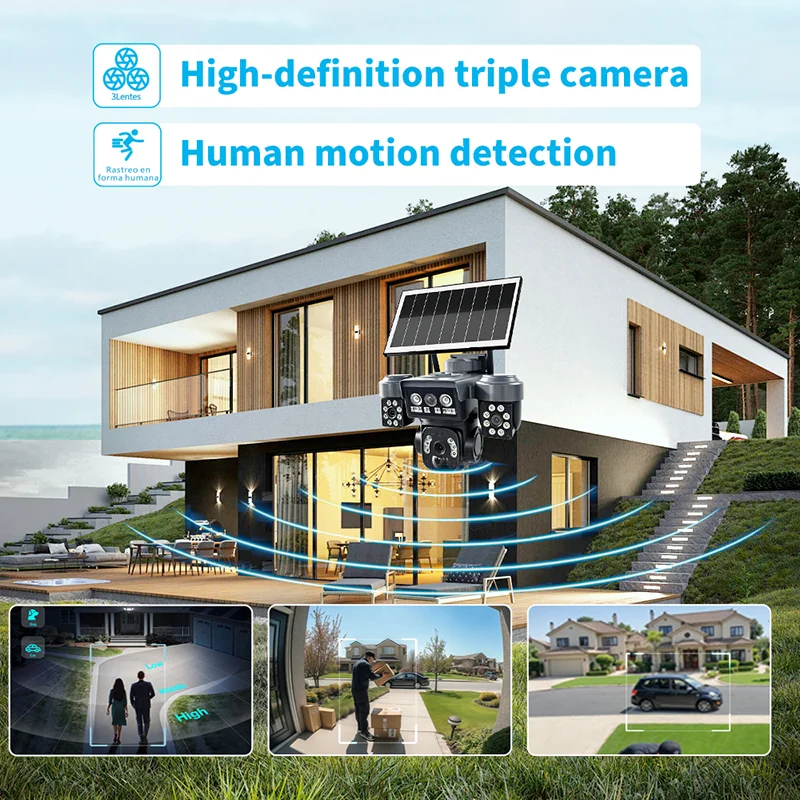
2. Independent Pan-Tilt Coverage Improves Viewing Flexibility
The number of lenses is only one consideration when evaluating a multi-lens security camera. How those lenses are positioned and controlled also affects the overall surveillance experience.
Fixed cameras provide a consistent viewing angle, but their coverage is determined largely by the original installation direction. Pan-tilt cameras introduce additional flexibility by allowing the camera assembly to move horizontally and vertically.
ANJIA combines bullet-style and ball-style camera structures with independent pan-tilt coverage. This configuration offers a more flexible approach to observing different outdoor areas.
Independent camera movement can be particularly useful when the monitoring environment changes. For instance, users may need to check different sections of a property rather than continuously observing one fixed direction.
For security system buyers, this makes the relationship between lens arrangement and mechanical movement an important selection factor. A well-designed multi-lens security camera should be evaluated according to its actual viewing range, movement capability, and intended installation scenario.
3. Higher Resolution Helps Capture More Image Detail
Surveillance coverage is important, but image clarity also determines how useful recorded footage can be.
A camera may monitor a large area, yet insufficient image detail can make it difficult to identify objects or understand activities in the recorded scene. Resolução, processamento de imagem, condições de iluminação, and viewing distance all influence the final result.
ANJIA’s 6MP solar security camera is designed to provide detailed video for outdoor monitoring applications. The multi-lens configuration works alongside the camera’s image system to support different viewing perspectives.
Another relevant feature is H.265 video compression. Compared with less efficient compression methods, H.265 can reduce the amount of data required to store video at comparable image quality, depending on encoding settings and scene conditions.
This is particularly relevant for cameras using local TF-card storage. ANJIA supports TF-card storage up to 256GB, giving users a local storage option for recorded surveillance footage. Para compradores, resolution and compression should be considered together. A higher resolution provides more image information, while efficient compression can help manage storage requirements.
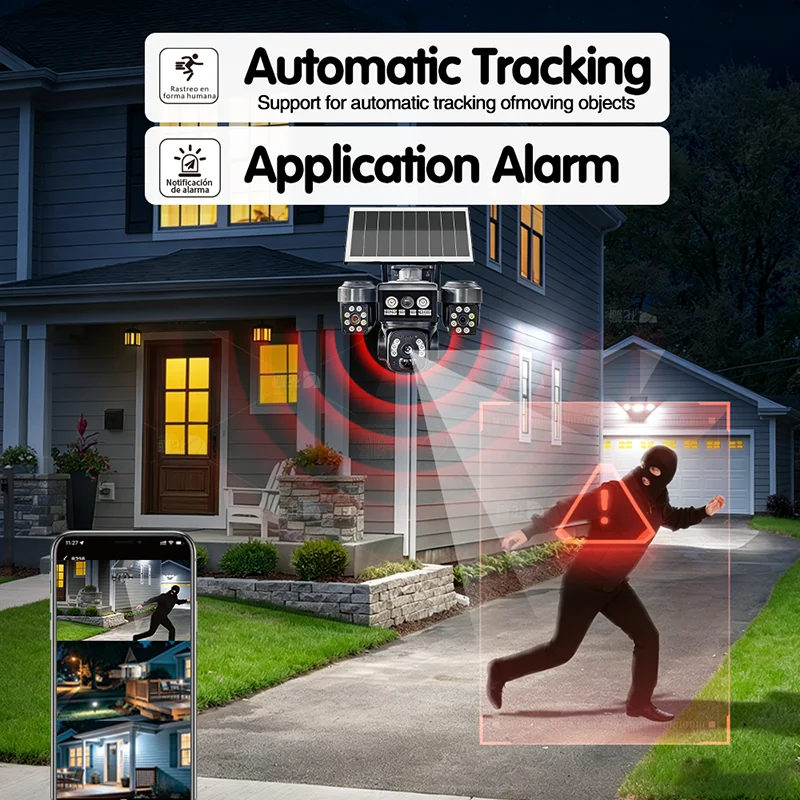
4. AOV Technology Supports Different Recording Requirements
Traditional motion-activated security cameras typically begin recording when movement is detected. This approach can help reduce unnecessary recording, but the recording schedule depends on detection settings and system behavior.
AOV technology offers another approach to surveillance recording. AOV generally refers to Always-On Video, with recording and power-management behavior depending on the specific product implementation.
For solar-powered outdoor cameras, this technology is especially relevant because continuous monitoring needs to be balanced against available battery capacity and solar charging conditions.
ANJIA’s AOV Triple-Lens Solar Camera combines AOV functionality with human and motion detection. These features support outdoor monitoring by helping users identify relevant activity while managing recording and power requirements.
When evaluating an AOV security camera, buyers should check its actual recording modes, event detection settings, e consumo de energia. The term AOV alone does not establish a specific recording frame rate or guarantee uninterrupted recording under every environmental condition.
5. Solar Power and a Large Battery Support Outdoor Installation
Power supply is another important consideration when selecting an outdoor security camera. Some monitoring locations do not have convenient access to electrical outlets, making traditional wired installation more difficult.
A solar-powered security camera can reduce dependence on a fixed power connection by using solar energy to recharge its battery.
ANJIA’s triple-lens solar camera features a 12000mAh battery and supports solar power as well as DC 5V 2A power input. This combination provides users with different power supply options according to their installation conditions.
No entanto, actual operating time depends on several factors, incluindo:
- Daily sunlight exposure and solar panel performance
- Recording frequency and camera activity
- Wireless signal strength
- Ambient temperature
- Battery condition and charging efficiency
The power requirements of multi-lens systems should also be considered during product selection. Buyers should evaluate the battery capacity and solar charging configuration together rather than looking at battery capacity alone.
6. 4G Connectivity Makes Remote Monitoring More Flexible
Outdoor surveillance locations are not always close to a home or office network. Fazendas, canteiros de obras, remote storage areas, and temporary facilities may have limited access to wired internet infrastructure.
A 4G security camera provides an alternative by using a compatible cellular network for connectivity.
ANJIA’s AOV Triple-Lens Solar Camera supports 4G connectivity, making it suitable for outdoor monitoring environments where a compatible cellular signal is available.
This feature can simplify installation in locations where running network cables would be inconvenient. Users should still check supported network bands, SIM card requirements, carrier compatibility, and local signal availability before purchasing.
Combining 4G connectivity with solar power gives the camera greater installation flexibility, particularly for outdoor locations without convenient access to both electricity and fixed broadband.
7. Night Vision and Two-Way Audio Add Practical Security Functions
Outdoor monitoring does not stop when daylight disappears. Nighttime image performance is an important consideration for cameras installed around entrances, jardas, parking spaces, and commercial facilities.
ANJIA incorporates enhanced dual-light night vision to support monitoring in low-light environments. The camera also features human and motion detection, helping users identify activity within the monitored area.
Two-way audio adds another layer of functionality. It allows communication through the camera’s audio system, which can be useful when checking visitors, communicating with people near an entrance, or responding to activity around a property.
These features make the camera more than a device for capturing video. They provide additional tools for monitoring and interacting with outdoor environments.
Why Consider ANJIA’s AOV Triple-Lens Solar Camera?
Multi-lens technology can improve the flexibility of outdoor surveillance, but the overall value of a security camera depends on how its imaging, conectividade, power supply, and detection functions work together.
ANJIA’s AOV Triple-Lens Solar Camera brings several features into one outdoor security solution:
- 6MP video: Supports detailed outdoor surveillance.
- Three 4.0 lentes mm: Provides multiple viewing perspectives.
- Independent bullet-ball pan-tilt coverage: Offers flexible camera positioning.
- 4Conectividade G: Supports installation in locations with compatible cellular coverage.
- 12000BateriamAh: Provides built-in energy storage.
- Solar and DC 5V 2A power support: Offers alternative power supply options.
- Compressão H.265: Helps manage video storage requirements.
- Human and motion detection: Supports activity monitoring.
- Enhanced dual-light night vision: Provides additional low-light monitoring capability.
- Áudio bidirecional: Enables communication through the camera.
- Armazenamento em cartão TF de até 256 GB: Supports local video storage.
Para distribuidores, security equipment retailers, e compradores de projetos, these specifications provide a useful starting point when evaluating multi-lens solar security cameras for different outdoor applications.
Considerações Finais
Multi-lens technology offers several advantages for outdoor security cameras, particularly when monitoring areas with different viewing requirements. Multiple optical units, flexible camera positioning, and suitable image resolution can help create a more adaptable surveillance system.
No entanto, lens count should not be the only purchasing consideration. Conectividade, capacidade da bateria, solar charging conditions, recording technology, visão noturna, and storage options all influence real-world performance.
With its three-lens configuration, AOV recording technology, 4Conectividade G, 12000BateriamAh, and multiple monitoring functions, ANJIA’s AOV Triple-Lens Solar Camera provides an integrated option for outdoor surveillance applications where flexible coverage and installation are important.