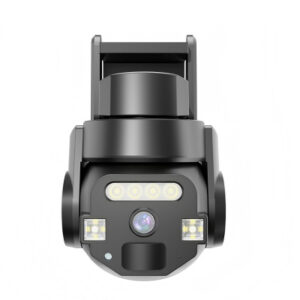
Keeping your property secure after sunset can be challenging. In low-light environments, ordinary cameras may struggle to capture clear details, making it difficult to identify people or understand what happened during an incident. This is where a night vision camera becomes especially useful.
Modern night vision security cameras use different imaging technologies and camera features to improve visibility when natural light is limited. Jedoch, image clarity depends on more than night vision alone. Auflösung, lens quality, image processing, and the camera’s ability to respond to movement all contribute to the overall monitoring experience.
For homeowners and businesses looking for reliable nighttime surveillance, understanding these factors can help them choose a camera that meets their needs. ANJIA’s C20 camera combines high-definition imaging, a starlight-grade lens, intelligente erkennung, and flexible storage to support everyday security monitoring.
1. How Does a Night Vision Camera Work in Low-Light Conditions?
A night vision camera is designed to capture images when lighting conditions are less than ideal. Depending on its technology, it may use infrared illumination, a sensitive image sensor, or available ambient light to produce a visible image.
Traditional infrared night vision cameras use infrared LEDs to illuminate a scene beyond the range of ordinary human vision. The camera captures the reflected infrared light and converts it into an image, often in black and white. This approach is useful in environments where visible lighting is limited or unavailable.
Starlight cameras work differently. They use highly light-sensitive imaging components and suitable lenses to make better use of the small amount of light already present in the environment. Depending on the sensor and lighting conditions, this technology can help produce brighter images and preserve more visible detail at night.
The actual result depends on the camera’s specifications and the surrounding environment. A location with a small amount of ambient light may produce a different image from a completely dark space. Understanding this distinction is important when choosing a night vision camera for outdoor or indoor surveillance.

2. Why Do Resolution and Lens Quality Matter for Nighttime Images?
Nighttime visibility is only part of the equation. A camera also needs to capture enough detail to make its footage useful.
High-definition resolution
Resolution determines how much image detail a camera can record. A higher resolution can help distinguish objects and provide a clearer view of a scene, although the final result also depends on sensor quality, lighting, compression, and recording conditions.
The ANJIA C20 features true 2MP high-definition resolution, providing detailed footage for everyday security monitoring. This resolution is suitable for users who want a practical balance between image detail and storage requirements.
A lens designed for low light
The lens also affects how much light reaches the camera’s image sensor. A lens with a wider maximum aperture can allow more light to enter, helping the camera capture images in dim environments.
The C20 uses a starlight-grade F2.0 lens, designed to support low-light performance. Combined with its 2MP imaging capability, this lens helps the camera make better use of available light when monitoring areas such as entrances, patios, and other residential spaces.
It is important to remember that a low-light lens does not eliminate the need for suitable lighting in every situation. If an area is completely dark, performance will depend on the camera’s specific imaging technology and whether additional illumination is available.

3. How Does Image Compression Affect Night Vision Footage?
A security camera may record clear images, but it also needs an efficient way to store video over time. This is particularly important for users who want to review footage after an event or maintain continuous monitoring.
Video compression reduces the amount of data required to store and transmit recordings. Without effective compression, high-definition footage can consume storage space quickly.
The ANJIA C20 uses H.265 video compression technology to reduce video file sizes while maintaining useful image quality. Compared with older compression methods such as H.264, H.265 can often achieve similar visual quality at a lower bitrate, depending on the footage and encoding settings.
This can help make better use of available storage capacity, especially when a camera records frequently or captures a large amount of motion.
Jedoch, compression is only one part of recording performance. Auflösung, frame rate, recording duration, scene complexity, and bitrate settings also affect how much storage is required. For users choosing a night vision security camera, these factors should be considered together rather than evaluating image quality in isolation.
4. Can Motion Detection and Human Tracking Improve Nighttime Security?
Clear footage is valuable, but finding important events in hours of recordings can be time-consuming. Intelligent detection features can help users focus on activity that may require attention.
Motion detection allows a camera to respond when movement is detected within its monitored area. Depending on the camera’s configuration, this may trigger recording or send an alert to the user.
Human tracking adds another layer of convenience by helping the camera follow a person as they move through the scene. This can be useful for monitoring entrances, driveways, and other areas where people may approach from different directions.
The ANJIA C20 combines motion detection and human tracking to support more responsive monitoring. When abnormal movement is detected, the camera can automatically record and send alerts, helping users become aware of activity without constantly watching a live feed.
Detection performance can vary with lighting, Distanz, obstructions, and configuration. Aus diesem Grund, it is worth testing the camera in the actual installation environment and adjusting detection settings to reduce unwanted alerts.

5. Why Is Pan-Tilt Coverage Important for a Night Vision Camera?
A camera’s field of view determines which areas it can monitor from its installed position. A fixed camera may leave parts of a larger area outside its view, particularly when monitoring open spaces or entrances with multiple approaches.
A pan-tilt security camera can change its viewing direction horizontally and vertically, allowing users to monitor a wider area without installing several fixed cameras.
The ANJIA C20 features a pan-tilt design with 350° horizontal rotation and 60° vertical rotation. This allows the camera to adjust its viewing direction across a broad area and helps reduce blind spots when positioned appropriately.
Pan-tilt movement can be especially useful when monitoring a yard, Eingang, garage area, or other space where activity may occur in different locations. Combined with human tracking, it can make it easier to follow movement across the camera’s available viewing range.
Nevertheless, rotation does not guarantee complete coverage of every angle. Wände, furniture, trees, and other physical obstacles can still block the view. Careful placement remains essential for effective surveillance.
6. What Storage Options Should You Consider?
Storage is another important factor when choosing an outdoor or indoor night vision camera. The right option depends on how often you need to review footage, how long recordings should be retained, and whether you prefer local or remote access.
The ANJIA C20 supports both TF card local storage and cloud storage, giving users flexibility in how they manage recordings.
- TF-Kartenspeicher: Keeps recordings on a local memory card, providing a straightforward option for users who prefer on-device storage.
- Cloud-Speicher: Can provide remote access to stored recordings, depending on the service, subscription, and network connection.
Local storage may appeal to users who want a simple recording solution, while cloud storage can be useful when accessing footage remotely or keeping recordings separate from the camera itself.
Before choosing either option, check the supported TF card capacity, cloud service terms, subscription costs, retention period, and internet requirements. These details can vary by product configuration and service provider.
7. Is a Battery-Powered Night Vision Camera Suitable for Your Home?
Power requirements can influence where a security camera can be installed. Wired models may be convenient when power outlets or fixed wiring are available, but some locations are difficult to reach with a power cable.
A battery-powered camera can provide more flexibility because it does not need to remain connected to a continuous external power supply. This can be useful for entrances, sheds, patios, and other locations where wiring is inconvenient.
The ANJIA C20 supports an optional configuration powered by two 18650 Batterien. This provides an alternative for users who prefer a battery-powered setup, subject to the product’s supported battery specifications.
Battery life depends on factors such as recording frequency, motion-detection activity, Schwenk-Neige-Bewegung, network conditions, temperature, and battery capacity. Frequent alerts or continuous activity can increase power consumption, so actual operating time will vary.
When comparing battery-powered security cameras, consider the expected workload and installation environment rather than relying on battery capacity alone.

8. How Do You Choose the Right Night Vision Camera?
The best night vision camera is not necessarily the model with the most features. It is the one that fits your environment, monitoring goals, and storage preferences.
Before making a decision, consider these key points:
- Nighttime image quality: Check the resolution, lens specifications, and the camera’s performance under the lighting conditions where it will be installed.
- Coverage: Consider whether a fixed camera is sufficient or whether pan-tilt movement would help monitor a wider area.
- Detection features: Look for motion detection or human tracking if you want to identify relevant activity more efficiently.
- Lagerung: Decide whether local TF card storage, Cloud-Speicher, or a combination of both suits your needs.
- Stromversorgung: Check whether the installation location supports wired power or would benefit from an optional battery configuration.
- Connectivity and compatibility: Confirm the network requirements, supported devices, and any app or cloud-service limitations before purchasing.
Evaluating these factors together provides a more realistic picture of how a camera will perform in everyday use.
Abschluss
A night vision camera captures useful images in low-light conditions through a combination of imaging technology, lens performance, resolution, and image processing. Features such as motion detection, menschliche Verfolgung, flexible storage, and pan-tilt movement can further improve the overall monitoring experience.
The ANJIA C20 brings together true 2MP high-definition resolution, a starlight-grade F2.0 lens, H.265-Komprimierung, Bewegungserkennung, and human tracking. Its 350° horizontal and 60° vertical rotation supports flexible viewing, while TF card and cloud storage provide recording options. An optional configuration powered by two 18650 batteries offers additional installation flexibility.
For users comparing night vision security cameras, the key is to look beyond a single specification. Consider the lighting conditions, coverage requirements, recording needs, and power setup of your intended location. Choosing a camera that fits these practical requirements can help build a more useful and reliable home security system.